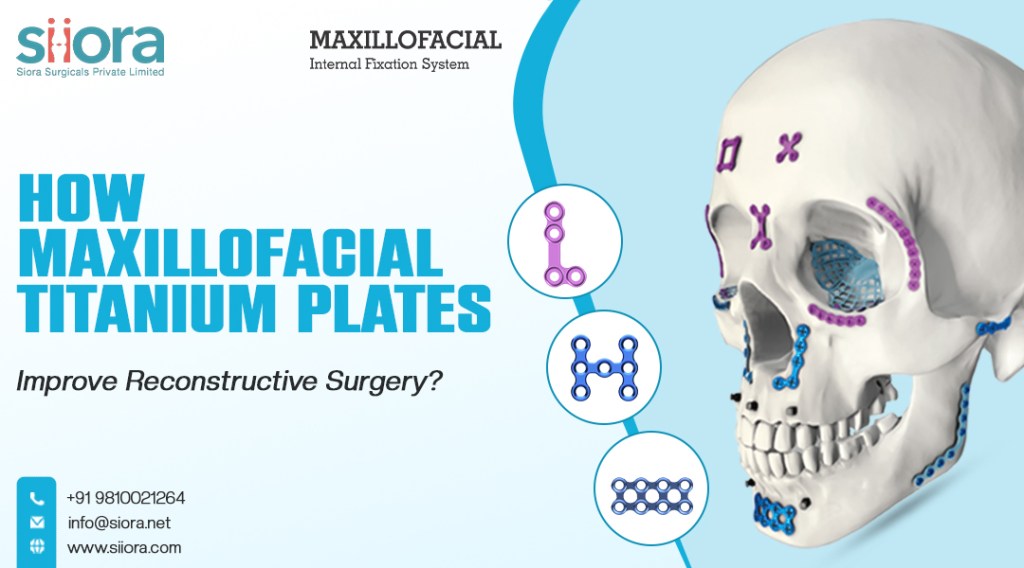
Reconstructive surgery of the face is never just about fixing bone. It is about restoring identity, function, and confidence. Whether the cause is trauma, tumor removal, or congenital deformity, the goal remains the same: rebuild the structure in a way that looks natural and works properly. Over the years, maxillofacial titanium plates have quietly changed how surgeons approach these cases.
Strong Support Where It Matters Most
Facial bones are delicate but highly important. They protect vital structures, support soft tissue, and define appearance. When these bones are fractured or surgically removed, they must be stabilized carefully. Titanium plates provide that stability.
Once positioned and secured with screws, these plates hold bone segments in proper alignment. This stability allows the bone to heal without shifting. In reconstructive procedures, especially after tumor resection, maintaining exact alignment is critical for both function and facial symmetry.
Designed to Work with the Body
One of the main reasons titanium is widely used is its compatibility with the human body. It does not easily corrode, and it rarely causes allergic reactions. The body generally accepts titanium without significant inflammation.
Over time, bone can even grow closely around titanium surfaces. This natural interaction helps create a secure and lasting reconstruction. For patients who may need long-term implants, this property is especially important.
Lighter Material, Better Comfort
The face is not an area where heavy implants are tolerated well. Titanium is much lighter than many traditional metals. Even though patients may not always feel the difference directly, lighter implants reduce stress on surrounding tissues.
This can contribute to better comfort during recovery. Patients are often able to resume speaking, chewing, and facial movement without the constant awareness of a bulky implant.
Flexibility During Surgery
Another advantage of maxillofacial titanium plates is their adaptability. Many plates can be shaped or contoured during surgery to match the patient’s anatomy. This is especially useful in complex fractures or reconstructive cases where every millimeter matters.
Surgeons can bend the plate carefully to follow the natural curves of the jaw, cheekbone, or orbital rim. This level of customization helps restore natural facial contours more accurately.
Encouraging Proper Healing
Stability plays a major role in bone healing. When bone fragments are held firmly in place, the body can begin the repair process without repeated disruption. Titanium plates provide rigid yet balanced fixation.
Because titanium has mechanical properties closer to bone than some other metals, it supports healthy load sharing. This means the bone still experiences normal forces during healing, which encourages natural regeneration.
Improved Outcomes in Complex Cases
In reconstructive surgery following cancer treatment, portions of bone may be removed entirely. In such situations, titanium plates help support bone grafts or free flaps. They act as a framework while new tissue integrates and heals.
In trauma cases involving multiple fractures, these plates simplify fixation. Surgeons can stabilize small fragments and rebuild the facial skeleton step by step. The result is often improved facial symmetry and better functional recovery.
Better Imaging and Follow-Up
Titanium also allows clearer imaging compared to many other metals. Follow-up X-rays and scans usually show fewer distortions. This makes it easier to monitor healing and check implant positioning.
For surgeons, this clarity provides reassurance. For patients, it reduces uncertainty during recovery.
A Reliable Choice in Modern Reconstruction
Maxillofacial titanium plates have become a trusted trauma implant in reconstructive surgery. They provide strength without excessive weight, stability without unnecessary rigidity, and long-term compatibility with the body.
Most importantly, they support both function and appearance. In facial reconstruction, those two goals are inseparable. By helping bones heal in the correct position and maintaining natural contours, titanium plates contribute to outcomes that restore not just structure, but confidence as well.

